icpeptide@gmail.comThis website has been online since June 2016.
Peptide Modification

Folding and Cyclization

Cyclization and controlled folding can be critical to peptide structure, stability, and function. IC-PEPTIDE supports cyclization-oriented programs for peptides that require disulfide bridge formation, conformational control, or other structure-defining post-synthesis transformations.

Disulfide-bridge expertiseLinear-to-cyclic workflow planningStructure-driven process support
Core challenge
Post-synthesis control
Linear peptides often require carefully managed downstream folding or cyclization to reach the desired final form.
Main focus
Disulfide-rich peptides
Particularly relevant for venom-inspired, cysteine-rich, and highly structured peptide classes.
Technical risk
Conformer complexity
Multiple cysteines can create unwanted bridge arrangements without a suitable strategy.
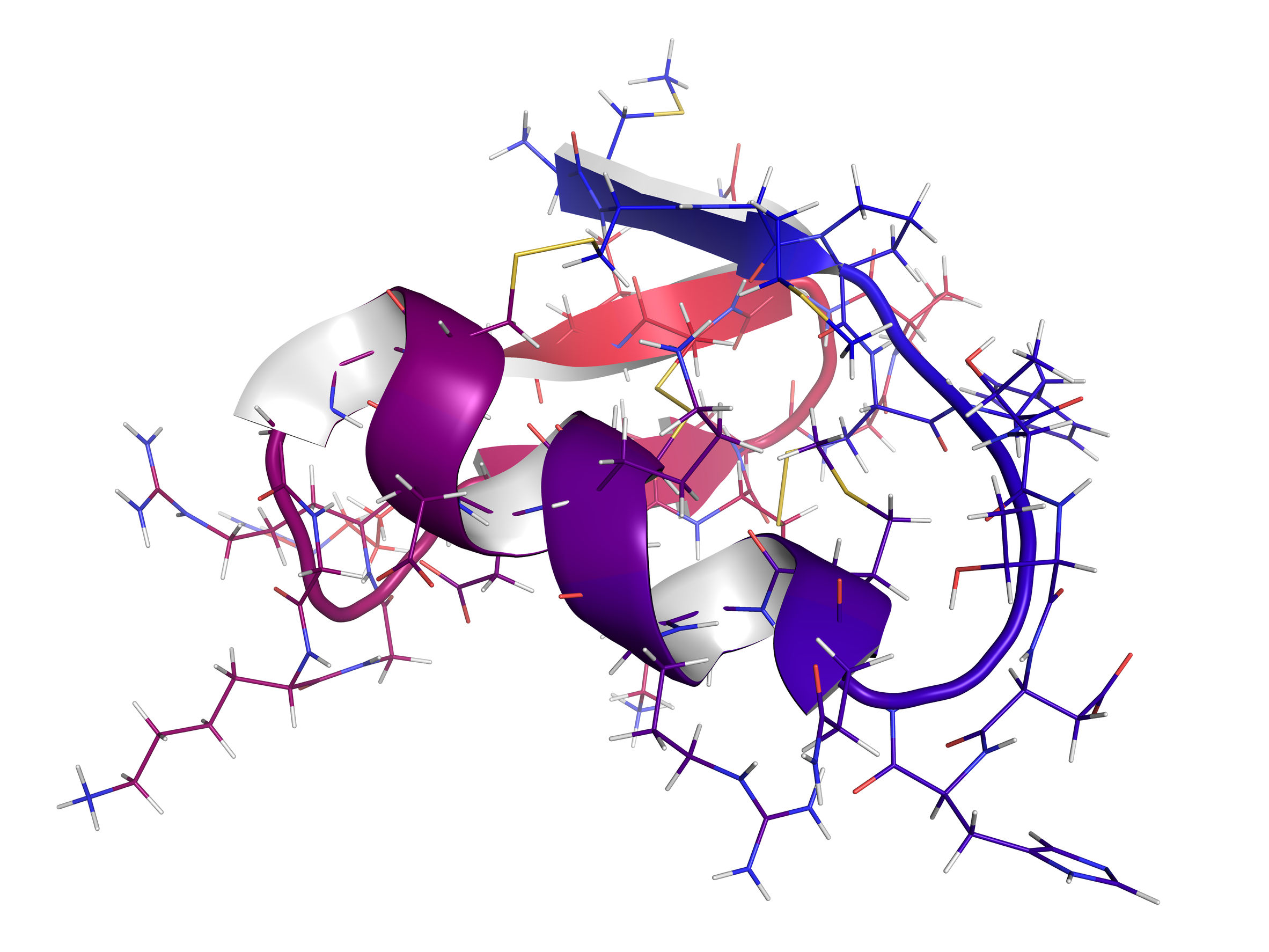
Structured peptide and disulfide-rich folding concept

Why cyclization matters

Many peptides are first assembled in linear form and only later advanced into their functional cyclic or folded architecture. This is especially important when biological activity depends on structural constraint or specific bridge formation.

Cyclization can influence stability, shape, proteolytic resistance, and in some programs the practical feasibility of the peptide as a usable research or development material.

Disulfide-containing peptide workflows

Disulfide bridges are among the most common and technically significant structural features in cysteine-rich peptides. Their controlled formation can be straightforward in simple systems, but becomes increasingly complex as the number of cysteines and possible conformers grows.

Projects involving one bridge, mixed cysteine states, or multiple bridge arrangements often require a deliberate oxidation and protection strategy rather than a generic post-synthesis treatment.

Planning for folding success

Folding and cyclization should be considered early during project design because sequence composition, bridge count, protection scheme, and intended analytical verification all affect the probability of obtaining the desired final structure efficiently.

IC-PEPTIDE approaches these projects with an emphasis on technical feasibility, route design, and realistic expectations for complex structured peptide manufacturing.

Next Step

Discuss your peptide modification requirements with IC-PEPTIDE

If your project requires specific labeling, conjugation, structural control, or nonstandard peptide engineering, our team can help evaluate the most practical route before synthesis begins.