Peptide solubility testing
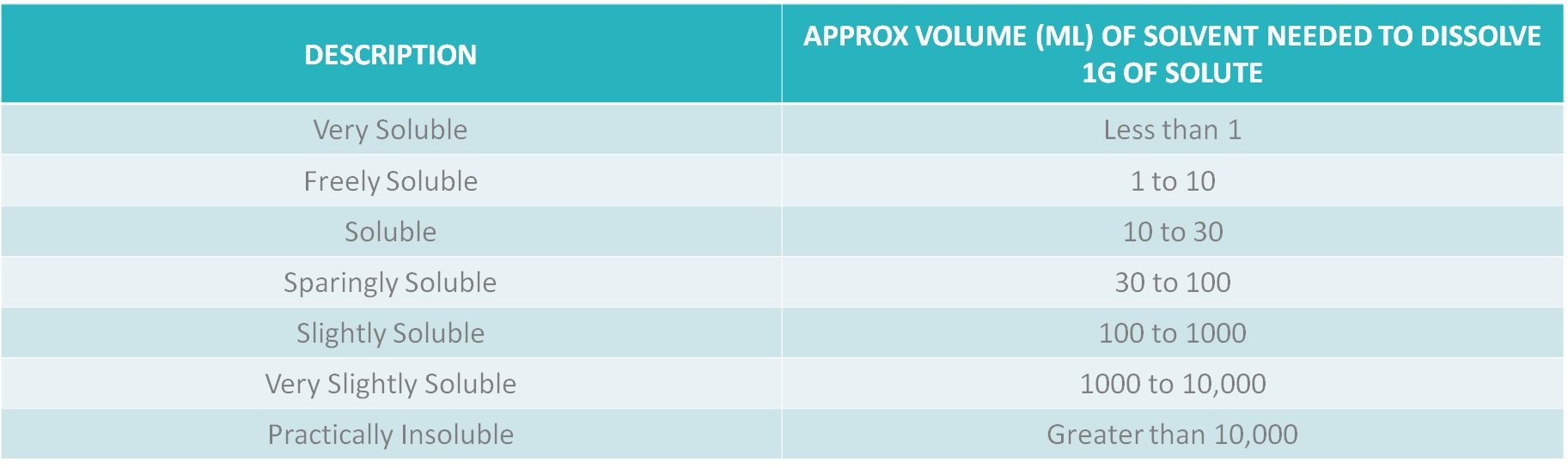
Peptide solubility testing is a mandatory step in drug development. By definition, the solubility of a substance is its saturation concentration in a given solution and temperature. Solubility is expressed in g/L.
IC-PEPTIDE offers to determine peptide solubility in pre-defined customized conditions. Various assays described below are available.

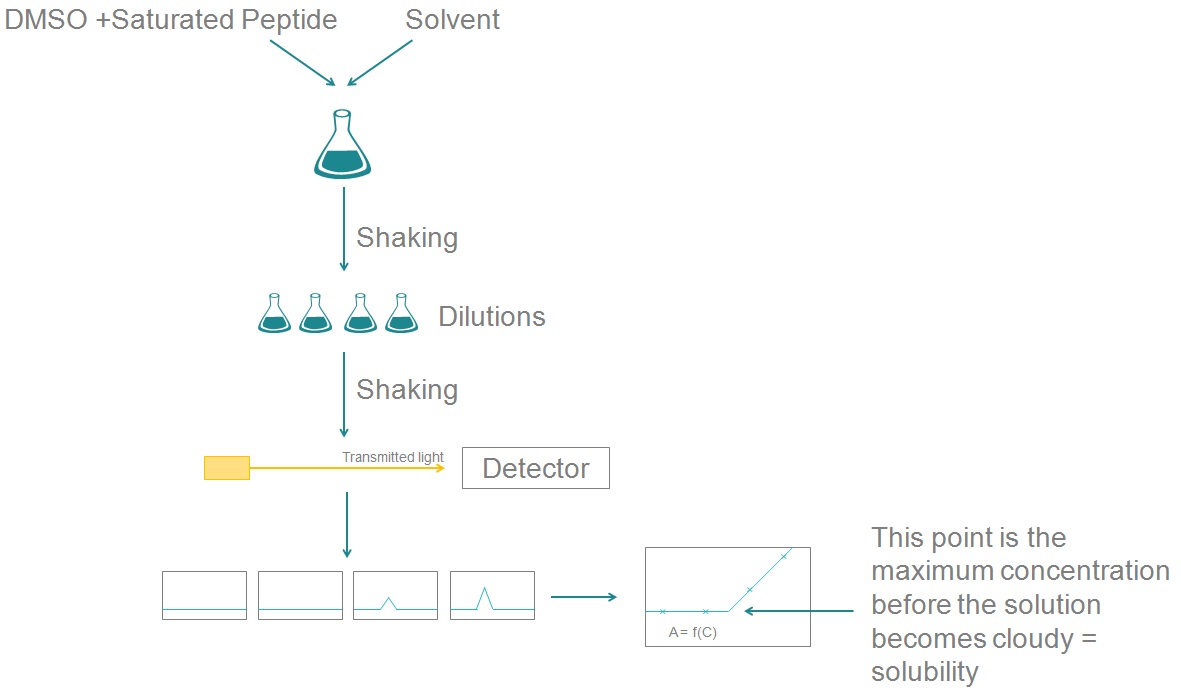
IC-PEPTIDE uses standardized methods of turbidimetric solubility assays. Each test is performed three times to ensure the most reliable results. The peptide is solubilized at several different concentrations. Turbidity appears when the solution is saturated. This cloudiness is measured with a UV-visible detector and a curve A=f(C) will be drawn. The inflection point corresponds to the maximum soluble concentration, i.e. the solubility.
IC-PEPTIDE can also provide results on equilibrium solubility.
Unlike turbidimetric solubility assays, incubation times are longer (24–72 h), so it can be more accurate for applications such as pre-formulation or toxicity studies.
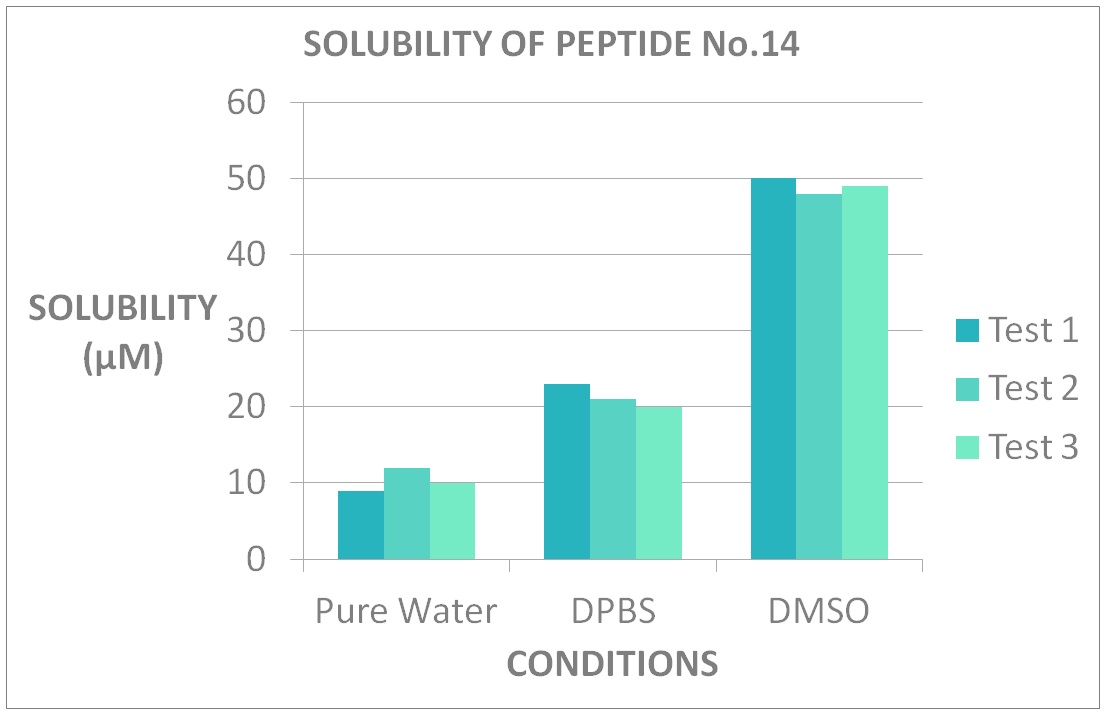
IC-PEPTIDE offers to screen different types of conditions (DMSO, water, acetonitrile, PBS, etc.) to help you determine the best solubility of your peptide.
The result will be given as a report containing the solubilities of your peptide in each solvent, as in the following example:
IC-PEPTIDEcan help clients improve peptide solubility by re-designing the sequence. Thanks to its individual peptide synthesis service or library peptide synthesis service, IC-PEPTIDE can rapidly synthesize designed sequences for clients' assay validation. Contact us for more information.